Understanding Heel Discomfort
Heel discomfort is a common problem for many people. It can make walking or standing painful. Simple foot exercises to reduce heel discomfort may help you feel better. But first, it is important to know what heel discomfort means. Heel discomfort is pain or soreness in the back or bottom of your foot. For example, you might feel sharp pain when you take your first steps in the morning. Sometimes, the pain can last all day.
Common symptoms of heel discomfort include:
Many things can cause heel discomfort. For instance, plantar fasciitis is a common cause. This means the thick band of tissue under your foot is irritated. Overuse, wearing unsupportive shoes, or standing for long hours can also lead to pain. Sometimes, heel discomfort comes from an injury or being overweight.
Benefits of Foot Exercises for Heel Discomfort
Foot exercises can help reduce heel discomfort in several ways. First, they stretch and strengthen the muscles in your feet. This can lower pain and make your feet stronger. In addition, the World Health Organization (WHO) notes that staying active supports joint and muscle health. Simple heel pain relief exercises can also boost blood flow, which helps your body heal.
Many people find that easy foot stretches for heel pain make daily tasks less painful. Because these exercises are gentle, you can do them at home. Over time, they may help you move with less pain and more comfort.
Simple Foot Exercises to Reduce Heel Discomfort
Below are some simple foot exercises to reduce heel discomfort. These can be done at home with little or no equipment. Remember to start slowly and stop if you feel sharp pain.
Towel Stretch
For best results, do this stretch in the morning. Always pull gently to avoid injury.
Calf Stretch Against the Wall
Because tight calf muscles can pull on your heel, this stretch can help reduce heel discomfort at home.
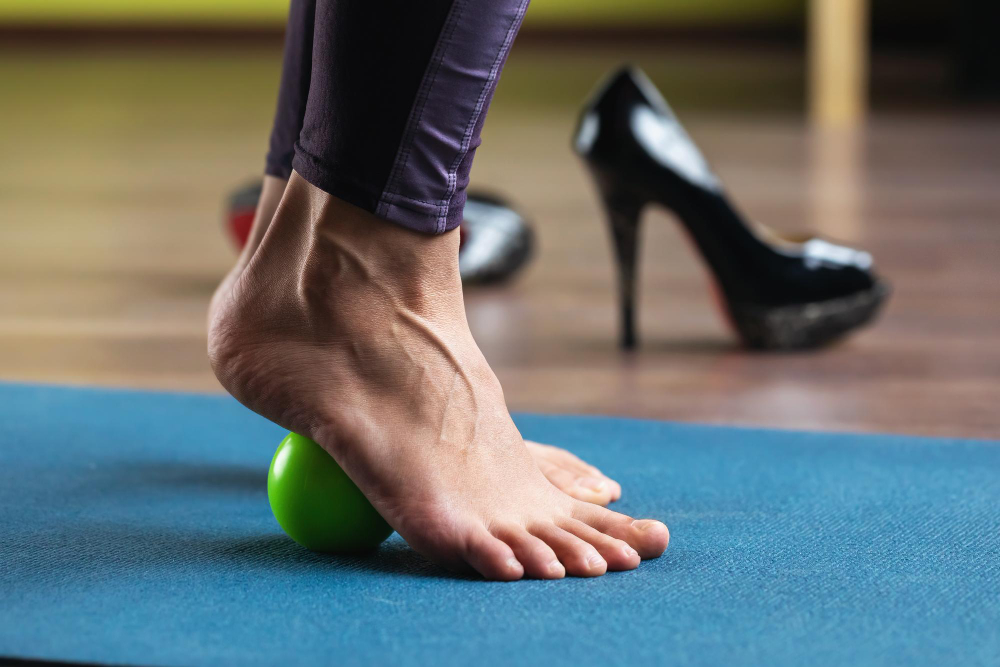
Foot Roll with a Ball
For added comfort, use a frozen water bottle instead of a ball. This can help reduce swelling.
Toe Towel Curls
Because this exercise strengthens your foot muscles, it may help prevent future pain.
Seated Foot Stretch
Always move slowly and stop if you feel pain. This stretch is gentle and easy to do at home.
Lifestyle Tips to Support Heel Comfort
Along with simple foot exercises to reduce heel discomfort, daily habits can help your feet feel better. For people living in urban areas, walking on hard surfaces can add stress to your heels. Therefore, making small changes can offer big relief.
Because small changes add up, these habits can help reduce heel discomfort at home.
When to Seek Medical Advice
Most heel pain gets better with rest and simple care. However, sometimes you need to see a doctor. If you notice any of the following warning signs, get medical help:
Early treatment can help prevent more serious problems. Always listen to your body and seek care when needed.
Conclusion
If your heel discomfort continues or gets worse, Dr. Durg Pratap Singh can help. Schedule a consultation to get caring advice and a treatment plan just for you.